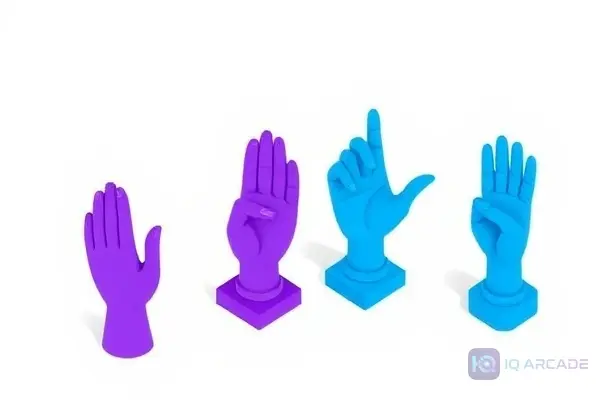
2026 ELITE CERTIFICATION PROTOCOL

Sign Language for Geriatric Care Mastery Hub: The Industry F

Timed mock exams, detailed analytics, and practice drills for Sign Language for Geriatric Care Mastery Hub: The Industry Foundation.

Start Mock Protocol
Success Metric

Average Pass Rate

82%
Logic Analysis
Instant methodology breakdown
Dynamic Timing
Adaptive rhythm simulation
Unlock Full Prep Protocol
Curriculum Preview

Elite Practice Intelligence

Q1Domain Verified
In the context of "The Complete Geriatric Patient Communication Course 2026," what is the primary rationale behind the "Zero to Expert" framework for geriatric patient communication, particularly as it relates to sign language in geriatric care?
To emphasize the use of technology-assisted sign language translation over direct human interaction in geriatric care.
To provide a structured, progressive pathway for developing nuanced and culturally sensitive communication skills with older adults, incorporating sign language as a vital tool.
To ensure all healthcare professionals achieve basic sign language proficiency within their first year of employment.
To standardize sign language vocabulary used in geriatric settings, minimizing the need for individualized communication strategies.
Q2Domain Verified
Considering the "The Complete Geriatric Patient Communication Course 2026," how does the course address the potential for age-related sensory changes (e.g., hearing and vision loss) when teaching sign language for geriatric care?
By advocating for modified sign language techniques, such as larger signs, increased facial expression, and clear, deliberate movements, while also considering visual aids and tactile reinforcement.
By assuming that all geriatric patients will have sufficient sensory acuity to learn standard sign language without modification.
By focusing solely on auditory cues to reinforce sign language learning.
By recommending the use of large-print sign language dictionaries exclusively.
Q3Domain Verified
According to "The Complete Geriatric Patient Communication Course 2026," what is a key difference in communication approach when interacting with a geriatric patient who has a diagnosis of moderate dementia versus a patient with mild cognitive impairment, specifically when employing sign language?
With moderate dementia, the focus shifts to more complex and abstract sign language to stimulate cognitive function, while mild cognitive impairment requires simplified signs.
For both conditions, the primary strategy is to rely on written communication supplemented by basic sign language.
The approach will be identical, as dementia and mild cognitive impairment do not significantly alter the need for specific sign language adaptations.
With moderate dementia, the focus shifts from complex sentence structures to simpler, concrete signs and gestures, often requiring repetition and visual cues, whereas mild cognitive impairment might allow for more nuanced communication.

Master the Entire Curriculum

Gain access to 1,500+ premium questions, video explanations, and the "Logic Vault" for advanced candidates.

Upgrade to Elite Access

Candidate Insights

Advanced intelligence on the 2026 examination protocol.

This domain protocol is rigorously covered in our 2026 Elite Framework. Every mock reflects direct alignment with the official assessment criteria to eliminate performance gaps.

This domain protocol is rigorously covered in our 2026 Elite Framework. Every mock reflects direct alignment with the official assessment criteria to eliminate performance gaps.

This domain protocol is rigorously covered in our 2026 Elite Framework. Every mock reflects direct alignment with the official assessment criteria to eliminate performance gaps.

ELITE ACADEMY HUB

Other Recommended Specializations

Alternative domain methodologies to expand your strategic reach.